Common Mistakes in Solar Site Surveys
The U.S. Department of Energy shows that so-called “soft costs” including permitting, design, and installation processes make up a significant portion of total system cost and are heavily influenced by…

Insights
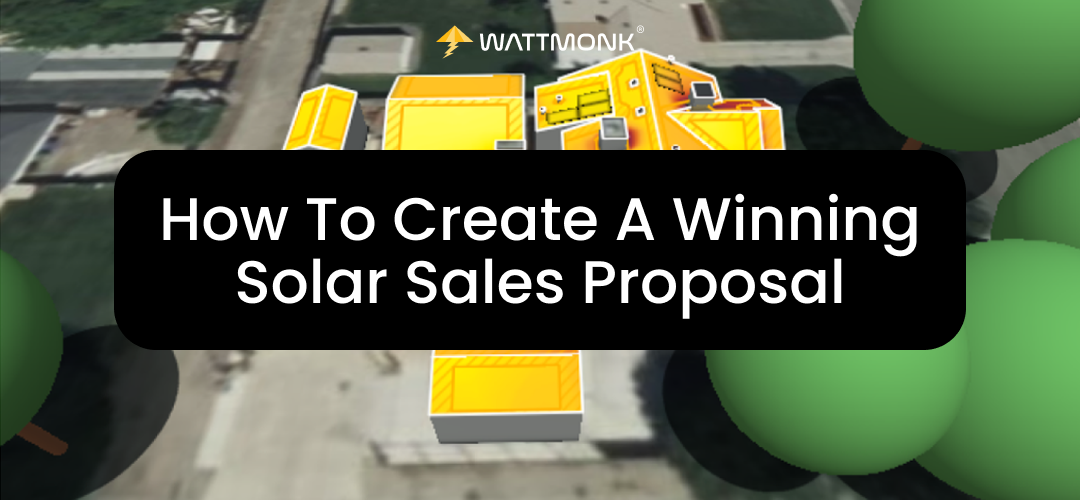
A solar sales proposal with clear ROI charts and professional layouts has a probability of converting 30% better, turning your hesitant prospects into signed contracts.
Every solar installation starts with a promise: deliver clean energy savings and a return on investment that keeps clients smiling long after the panels are up. So, in a market where decision‑makers juggle dozens of bids, a sloppy or generic solar sales proposal is the quickest way to lose clientele.
Where B2B clients demand precise savings projections, tax‑incentive breakdowns, and credible timelines, B2C clients or DIY homeowners want to see how panels lower their monthly bills and boost home value. A data‑driven, refined solar proposal won’t just inform, it’ll build trust, showcase your expertise, and tap into both emotional and financial motivations.
Ready to see how a winning proposal can lift your business and accelerate deal flow?
First impressions can either make or break a deal for your business, and a solar sales proposal is just that - a real first impression of your business. To label your solar proposal template as “winning”, it has to have a tailored, data-backed pitch that lays out the value of going for your prospect.
If you are pitching to a B2B client such as a property developer or energy consultant, the solar panel proposal template needs to answer certain critical business questions like what’s the ROI or what incentives apply? How will this affect operational costs over 25 years? Whereas if you are targeting homeowners/ residential clients, it must be crystal clear in answering: how much will they save monthly or is this system worth the upfront investment?
A winning solar proposal includes key project details like system size, panel specifications, installation timeline, financial breakdowns, energy output projections, and even site imagery. But more importantly, it needs to communicate confidence.
Whether you’re using solar proposal software or building from a solar panel proposal template, your document needs to feel less like a technical report and more like a custom-built offer that speaks directly to the client’s goals and motivations.
A winning solar sales proposal template does more than just showing numbers. It tells a story that aligns with your client's goals and values.
Here is a step-by-step guide to help you set a solar sales proposal template that resonates with your clients’ needs:
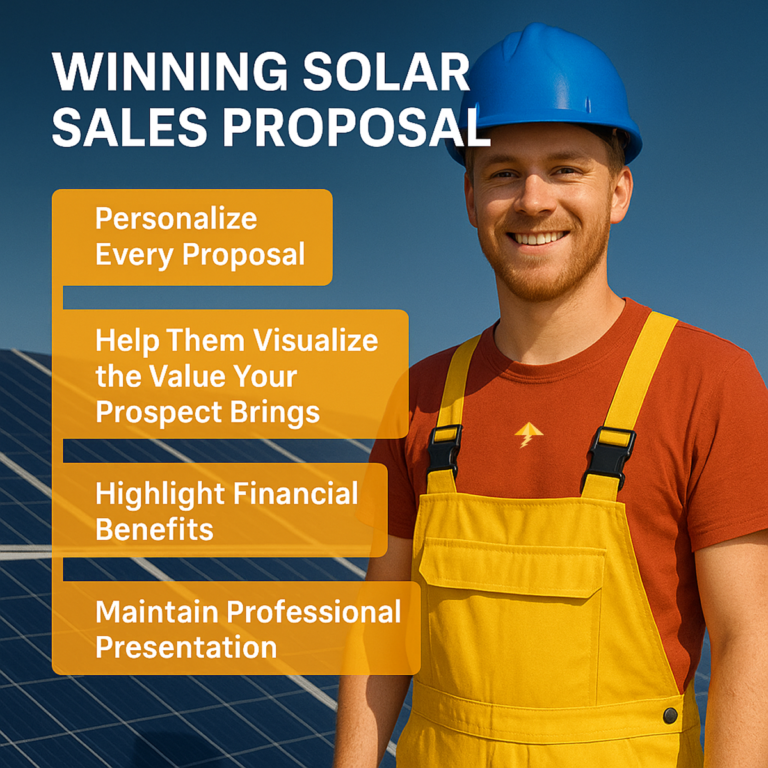
Tailor your proposal to address the specific needs and concerns of your client. For homeowners, highlight how solar can reduce monthly bills and increase property value. For businesses, focus on ROI, tax incentives, and long-term energy savings. Personalization builds trust and shows that you understand their unique situation.
Your solar sales proposal template should have a clear outline of the financial aspects:
Ensure your proposal reflects your company's professionalism:
Manually creating proposals is not just inefficient—it’s risky. One outdated utility rate or mistyped ROI figure can cost you a deal. That’s why we at WattMonk use Aurora Solar, an industry-leading solar proposal software that simplifies everything from system design to financial modeling. Whether you’re selling to a CFO who wants precise projections or a homeowner who just wants to know their monthly savings, Aurora equips you to deliver fast, accurate, and professional proposals every time.
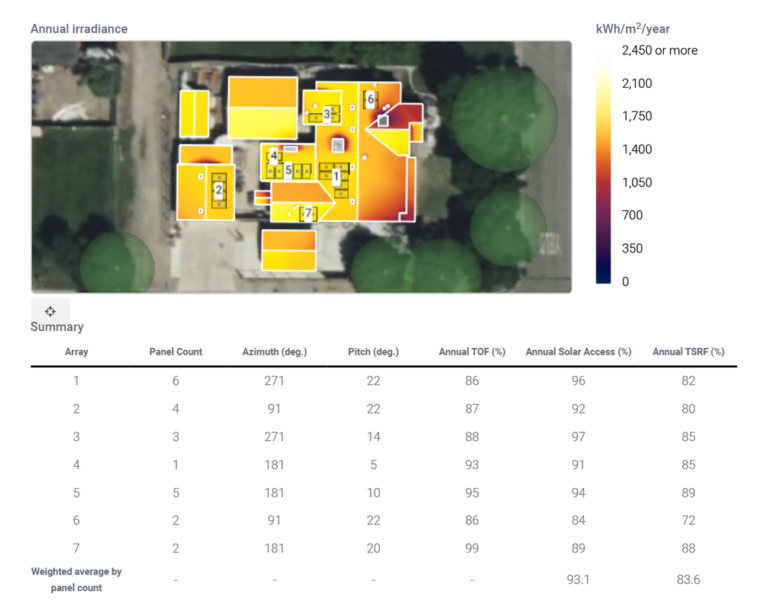
Aurora Solar isn’t just a drawing tool—it’s a full-stack proposal engine that helps you close faster with confidence. Here’s how it upgrades your process:
Accurately model roof layouts, shading, and system configurations using real satellite and LIDAR data—no site visit needed.
From net metering to time-of-use billing and local incentives, Aurora calculates lifetime savings and ROI in just a few clicks.
Stand out with proposals that carry your brand identity—logos, colors, font styles—while still being easy to edit and update.
Proposals can be shared digitally with mobile-friendly formats and e-signature capability—speeding up decision-making.
Generate proposals that are not only beautiful but also compliant with utility and financing partner requirements.
Even with the best software, there’s still work involved: collecting site data, formatting visuals, and fine-tuning every section to match the client’s needs. That’s where Wattmonk’s Sales Proposal service comes in.
We use Aurora Solar to create clean, high-impact proposals on your behalf—so your team doesn’t have to. You get:
A solar proposal isn’t just a pricing sheet—it’s a trust-building document. To turn interest into action, your proposal must balance technical accuracy with customer clarity. Whether you're pitching to a homeowner or a commercial stakeholder, these are the core elements every proposal must include to be persuasive and professional:
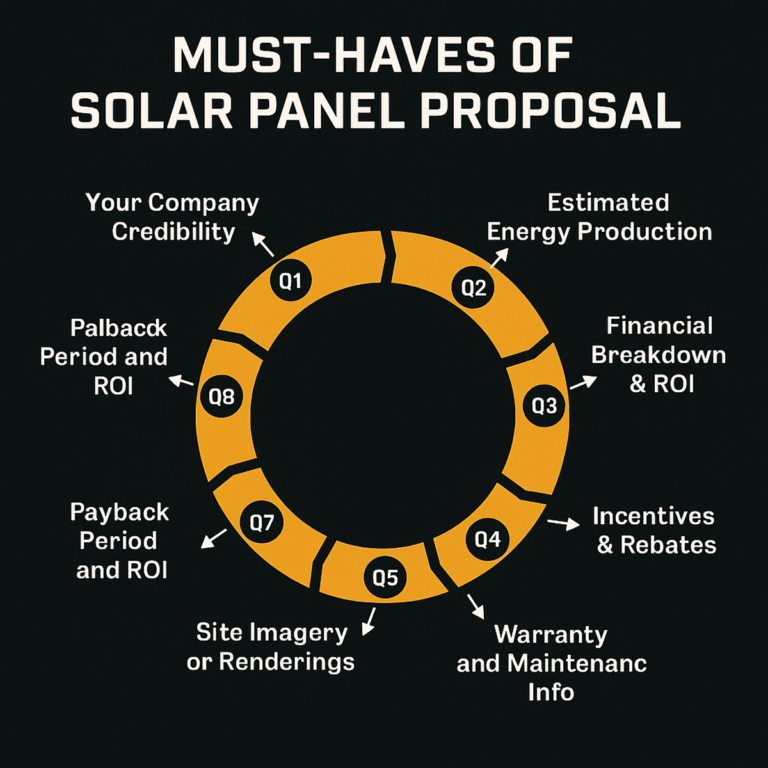
Start with the basics: system size (kW), panel brand and model, inverter type, and mounting structure. But don’t just list specs—explain what they mean in plain terms. For example, “This 7.2 kW system will cover 95% of your energy needs.”
Use tools like Aurora to project monthly and annual energy output. Include visuals like bar graphs or line charts to show how production varies seasonally. This makes performance easier to grasp, especially for homeowners.
This is what you should include while you're drafting the finances and ROI for your clients:
Make sure the numbers feel real. Instead of “Save $1,200/year,” say “Cut your energy bill from $170 to $40/month.”
Include a 3D rendering or satellite image with panel layout using Aurora’s design tools. This helps clients visualize the final system and adds a layer of polish that boosts trust.
Clearly outline what’s covered, for how long, and who to contact for support. B2B clients especially want to see low maintenance commitments and performance guarantees.
Highlight available programs like the ITC (Investment Tax Credit), net metering, local utility rebates, and SRECs. These can tip the scales for undecided clients.
Include a short section or slide about your company—years in business, completed installations, client testimonials, and credentials. Trust still wins deals.
Even seasoned installers can lose deals by overlooking simple—but critical—details in their proposals. Here’s what to avoid if you want your proposal to be taken seriously and convert consistently:
Every customer is different. Sending the same generic PDF to a homeowner and a commercial prospect is a red flag. Without personalization—like energy usage patterns, property-specific imagery, or customized ROI projections—you risk sounding like every other installer.
Fix it: Use Aurora Solar to auto-generate tailored designs and financials based on the exact address and utility data.
Yes, you know your STC from your PTC and your microinverters from your optimizers—but your clients probably don’t. Flooding your proposal with acronyms and engineering terms creates confusion, not confidence.
Fix it: Simplify. Explain technical points in clear, relatable language. “Your panels will produce 9,500 kWh a year—enough to run your home and cut your electric bill by 70%.”
Solar isn’t just a math problem—it’s an emotional decision. B2C clients are buying freedom from utility hikes, a cleaner lifestyle, or pride in owning a modern home. B2B clients are often thinking of ESG benchmarks, public image, or tenant savings.
Fix it: Tie financial benefits to emotional drivers. “Lower bills” becomes “No more rate hikes.” “Net metering” becomes “Extra savings from the grid working for you.”
Text-heavy proposals make even great offers fall flat. Clients want to see their system—not just read about it.
Fix it: Use Aurora’s visual renderings, side-by-side comparisons, energy graphs, and branded layouts to create an engaging experience.
You’ve sold them on the value—but then what? If your proposal doesn’t clearly outline what happens after signing, it creates hesitation
Fix it: Always include a next-steps checklist (site survey, permitting, install timeline, etc.), plus an easy CTA or e-signature option.
At the end of the day, your solar proposal is more than a document—it’s your first real handshake with the client. It either sets you apart as a professional worth trusting, or it gets lost in the pile of “maybes.” A winning proposal is clear, data-backed, and emotionally resonant. It answers every unspoken question before it’s asked, and it lays out the path forward with zero confusion.
If you’re serious about growing your solar business, it’s time to stop building proposals manually and start closing smarter. With Aurora Solar powering your design and financials—and Wattmonk’s expert team handling the proposal creation—you get to show up in front of your prospect with confidence, speed, and precision.
Let us do the heavy lifting. You focus on selling. We’ll make sure your proposals are convincing.
Get started with Wattmonk’s Sales Proposal service today and close your next deal with a proposal that works as hard as you do.
Explore Related Insights
Dive into our meticulously selected articles that provide insights on sustainable practices and eco-friendly strategies for brands.