Common Mistakes in Solar Site Surveys
The U.S. Department of Energy shows that so-called “soft costs” including permitting, design, and installation processes make up a significant portion of total system cost and are heavily influenced by…

Insights
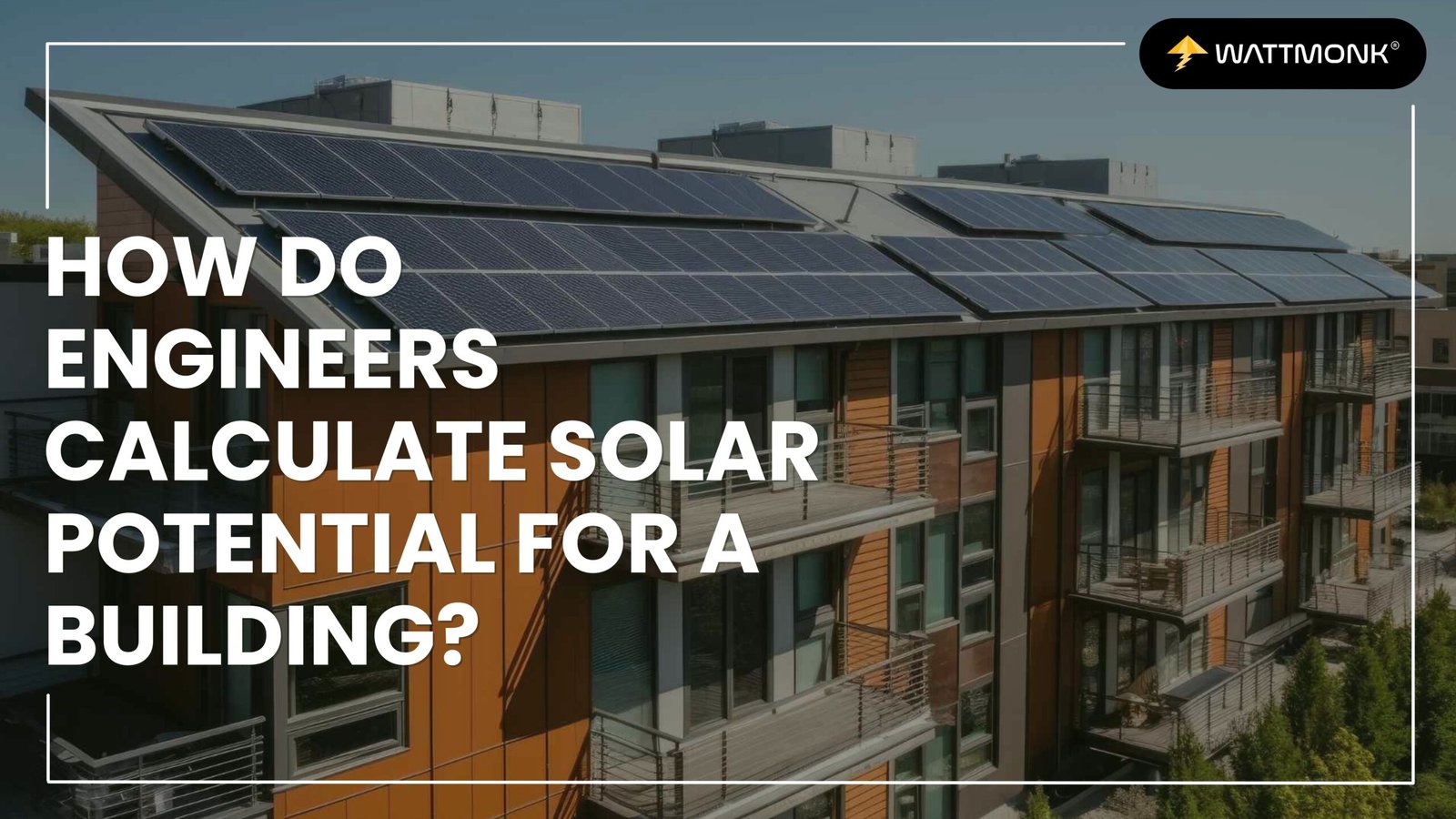
A roof may look solar-ready, but performance depends on engineering. A structured solar potential calculation determines how much energy a structure can truly produce. NREL research shows even high-quality solar datasets carry 5–8% annual uncertainty and 17–29% hourly uncertainty, enough to shift design and yield forecasts if not modeled correctly. That is why Building solar potential analysis cannot rely on assumptions.
Engineers perform solar potential calculation for buildings through building solar potential assessment, solar site assessment for buildings, and solar energy assessment for buildings. They apply solar engineering calculation methods, including solar irradiance calculation, solar insolation calculation, peak sun hours calculation, and shading analysis for solar panels.
These drive rooftop solar potential calculation, PV system sizing calculation, solar energy output calculation, solar yield estimation, and complete solar feasibility analysis for buildings, showing how engineers calculate solar potential accurately.
Solar potential calculation influences more than projected production. It shapes how smoothly a project moves through engineering review, permitting, procurement, and interconnection.
A detailed building solar potential assessment helps ensure early design assumptions reflect actual roof conditions, structural limits, and electrical realities. Combined with solar site assessment for buildings and solar energy assessment for buildings, this work helps teams move into plan set development and permitting with fewer revisions and more predictable outcomes.
From a project standpoint, accurate solar potential calculation for buildings supports:
Before engineers begin modeling a project, they determine which approach will be used to estimate energy generation. In practice, solar projects typically start with simplified estimation techniques and then move into engineering-grade analysis as the project advances. Understanding the difference between these methods clarifies why professional Solar potential calculation is more than just a roof-area assumption.
Rule-of-thumb approaches are used in the early stages of quoting when speed matters more than precision. This method estimates output using generalized assumptions, typically roof area multiplied by regional watt-density factors. While useful for rough budgeting, it does not qualify as a professional building solar potential assessment because it lacks engineering validation.
Key limitations include:
Engineering-grade analysis is the method used for professional solar potential calculation for buildings. It relies on measurable inputs, environmental modeling, and system design simulation rather than assumptions. This process forms the foundation of a complete solar energy assessment for buildings and is required for permitting, system design, and financial forecasting.
This method includes:
Solar potential numbers have limited value until they translate into design decisions that pass engineering review and AHJ scrutiny. Installers often see strong production estimates fall apart at the permitting stage because layout assumptions did not fully consider fire setbacks, structural zones, conduit routing paths, or service panel constraints. This is where early technical assessment must connect directly to documentation.
A well-developed solar potential assessment should feed into plan set development in the following ways:
Usable roof area identified during rooftop solar potential calculation should already account for obstructions, ridge setbacks, pathways, and shading zones. This reduces redraws during plan check.
PV system sizing and module selection must correspond with roof type, attachment spacing, and point load distribution reviewed during site assessment.
Solar yield estimation and inverter sizing should be reflected in string design, combiner placement, conductor sizing, and overcurrent protection shown in the single-line diagram.
Solar feasibility analysis should anticipate NEC and local fire code requirements that influence equipment placement and access pathways.
Solar energy output calculation and system size must match the values used in interconnection applications to avoid utility rework requests.
A structured engineering workflow ensures every building’s solar potential calculation is accurate, actionable, and aligned with real-world constraints. Engineers follow a step-by-step process that transforms site data and environmental inputs into a detailed building solar potential assessment. This workflow not only estimates energy output but also guides PV system sizing calculation, layout optimization, and feasibility analysis.
Accurate site assessment ensures the rooftop solar potential calculation reflects what can truly be installed. So, the first step is gathering precise site data:
This step ensures the building solar potential assessment is practical, safe, and maximizes energy capture. With site and irradiance data ready, engineers determines:
Accurate PV system sizing calculation prevents over- or under-design and ensures realistic energy forecasts. Engineers now match the system to energy needs:
This step turns solar potential calculation for buildings into actionable data for planning and financial assessment. Engineers translate the design into predicted performance:
A thorough solar feasibility analysis for buildings ensures that high solar potential translates into a real, installable system. Finally, engineers evaluate project viability:
While rule-of-thumb methods can give a quick estimate, they are inherently limited. They rely on generalized assumptions such as roof area and average regional solar irradiance, ignoring critical factors like shading, tilt, electrical constraints, and system losses. For most projects, these shortcuts can lead to inaccurate forecasts, undersized systems, or unexpected performance shortfalls.
In contrast, engineering-based solar potential calculation accounts for:
This method ensures that a building solar potential assessment is accurate, actionable, and aligned with real-world performance, reducing design risks and maximizing energy capture.
Engineers do not rely on assumptions alone. A defensible solar potential calculation is built on verified datasets, simulation engines, and field inputs. These tools reduce uncertainty in building solar potential estimates and ensure that production numbers hold up during design review, permitting, and financing discussions.
Key technical inputs include:
Used for solar irradiance calculation, solar insolation calculation, and peak sun hours calculation. Engineers typically reference long-term satellite and ground station datasets to model seasonal variation rather than using annual averages.
Central to shading analysis for solar panels and rooftop solar potential calculation. Obstructions, parapets, HVAC units, and nearby structures are modeled to quantify hourly shade losses.
Supports solar energy output calculation and solar yield estimation by accounting for temperature coefficients, inverter efficiency, mismatch losses, soiling, and wiring losses.
Used for PV system sizing calculation, string configuration, voltage window checks, and conductor sizing aligned with NEC constraints.
Field measurements validate tilt, azimuth, roof condition, structural zones, and service panel capacity — critical for solar site assessment for buildings and overall solar feasibility analysis for buildings.
Accurate solar potential calculation directly affects cost control, approval timelines, and system performance. For installers, EPCs, and project owners, errors in building solar potential assumptions often surface later as redesigns, permit delays, or underperforming assets.
Accurate solar potential calculation is the cornerstone of any successful solar project. A thorough building solar potential assessment enables installers and developers to design systems that maximize energy output, minimize surprises, and meet financial and regulatory requirements.
Combining solar potential calculation for buildings, solar site assessment for buildings, and solar energy assessment for buildings with engineering-grade modeling — including solar irradiance calculation, peak sun hours calculation, solar insolation calculation, shading analysis for solar panels, rooftop solar potential calculation, PV system sizing calculation, solar energy output calculation, solar yield estimation, and solar feasibility analysis for buildings, engineers ensure that predicted performance aligns with reality.
Explore Related Insights
Dive into our meticulously selected articles that provide insights on sustainable practices and eco-friendly strategies for brands.