Common Mistakes in Solar Site Surveys
The U.S. Department of Energy shows that so-called “soft costs” including permitting, design, and installation processes make up a significant portion of total system cost and are heavily influenced by…

Insights
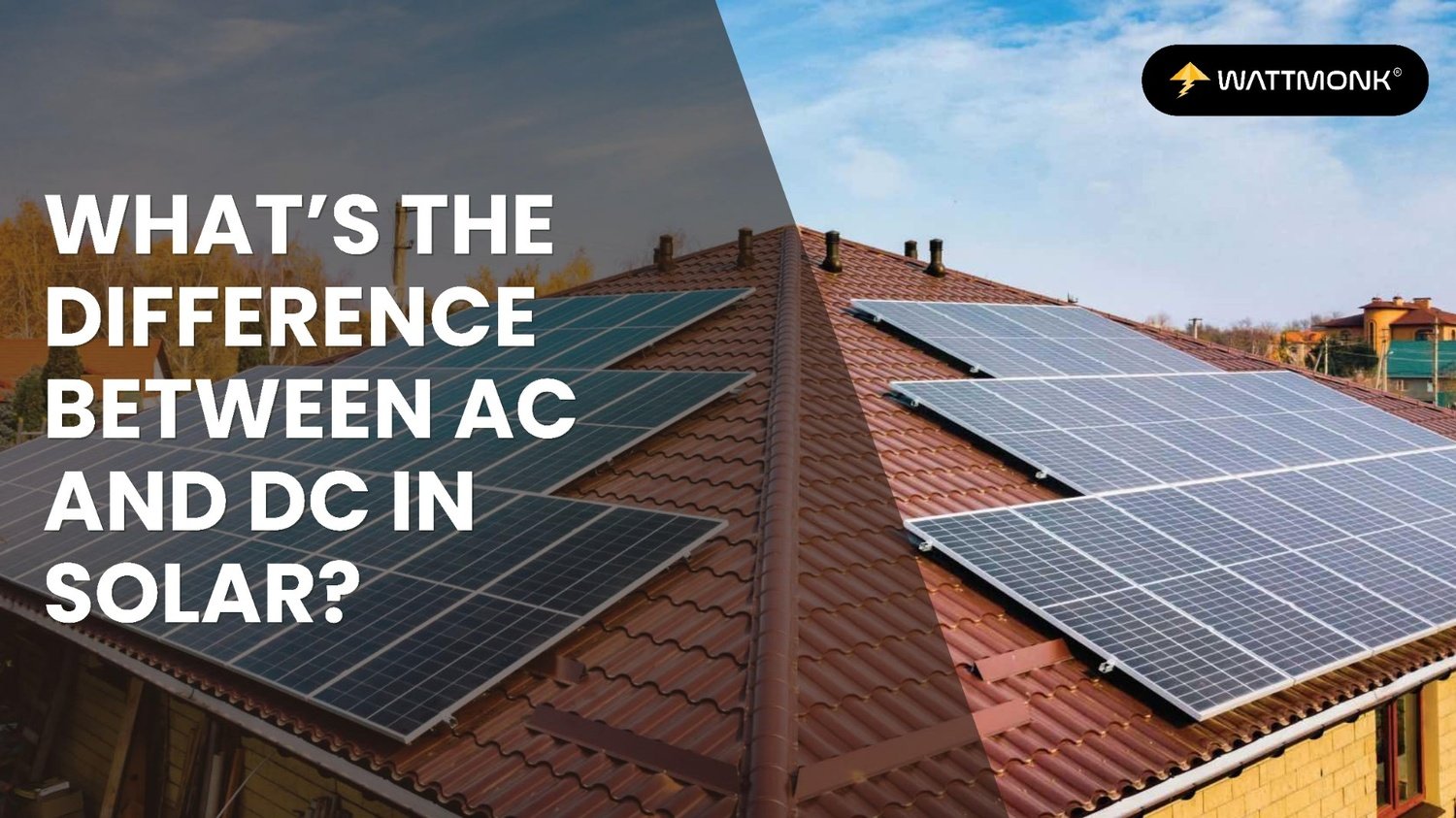
Solar energy is one of the fastest-growing sources of electricity worldwide. Solar PV generation accounted for more than 5 % of global electricity demand, the fastest growth of any major energy source.
Despite this scale, many people don’t realize that solar panel acdc refers to a fundamental difference in how electricity is produced versus how it’s used. Solar panels generate direct current (DC) power, but homes, businesses, and the grid operate on alternating current (AC). That mismatch is why every PV system needs an inverter to convert dc solar energy into ac solar energy before it can power circuits and appliances.
Understanding solar panel acdc starts with recognizing that solar generation and electrical consumption operate on different types of current. ACDC means two distinct electrical forms. Direct current (DC) maintains a constant polarity and flows in one direction while alternating current (AC) periodically reverses direction and operates at a defined frequency, typically 50 or 60 Hz depending on the grid.
Solar panels generate dc solar energy at the solar cell level. This is a direct output of the photovoltaic process and is the native electrical form produced by PV modules. However, residential, commercial, and utility electrical infrastructure operates on AC solar energy.
It determines inverter selection, electrical design, protection sizing, and how a system connects to the grid. Every solar installation is fundamentally designed around managing this solar panel ACDC transition.
At the panel level, each solar cell generates a small amount of DC solar energy when exposed to sunlight. These cells are wired together to increase voltage and current, forming a module. Multiple modules are then connected in series and parallel to create usable system voltages. At this stage, the entire solar array is still producing DC power.
This directly answers two of the most common questions in the industry: are solar panels ac or dc and do solar panels produce ac or dc. The answer in both cases is DC.
AC enters the picture only after inversion. Until then, everything from the panels to the inverter input remains on the DC side. This is why DC sizing, string configuration, and voltage limits are critical considerations in system design, engineering, and permitting.
Solar panels generate DC solar energy, but homes and the grid operate on AC. The inverter enables this solar panel acdc transition and makes the system operational.
Electricity produced at the module level flows through string wiring and reaches the inverter as DC power. At this stage:
It is the defining step in solar panel ACDC conversion. The inverter converts DC into ac solar energy by electronically switching the current to match grid requirements. This conversion ensures:
Once converted, AC power flows into the building’s electrical distribution system.
From here, electricity can:
The point at which solar panel ACDC conversion occurs depends on system architecture:
The discussion around AC vs DC solar is often misunderstood. The difference lies in where the solar panel ACDC conversion happens and how the system delivers usable power from the roof to the electrical panel. This architectural choice affects system design, performance behavior, and engineering decisions.
In traditional DC solar systems, panels generate DC solar energy, which travels through string wiring to a central inverter. The inverter then converts this into ac solar energy for use in the building and export to the grid. This means high-voltage DC remains present between the array and the inverter.
In AC solar systems, conversion happens at the module level using microinverters. Each panel converts its output immediately, which is why these setups are commonly referred to as alternating current solar panels. From that point onward, power moves through the system as AC.
This difference significantly influences system engineering. DC systems require careful string sizing to ensure voltage stays within inverter operating limits. Conductor sizing, voltage drop calculations, and protection design are all based on DC parameters up to the inverter.
AC systems shift this complexity to the module level. Since conversion happens earlier, the rooftop wiring carries AC instead of high-voltage DC. This changes how circuits are designed, protected, and documented during the engineering and permitting process.
System performance is also affected by where conversion occurs. In DC systems, panels are electrically linked in strings. If one panel’s output drops due to shading or mismatch, it can influence the performance of the entire string.
In AC systems, each panel operates independently because conversion happens locally. This isolates performance losses and provides more granular visibility into system output. From a monitoring and maintenance perspective, this can make fault identification more precise.
From an installer and EPC standpoint, the solar panel acdc configuration directly affects equipment selection, layout decisions, and electrical documentation. It determines inverter placement, circuit routing, and how the system is represented in plan sets and interconnection submissions.
Both AC and DC architectures are proven and widely used. The correct choice depends on project conditions, system size, and engineering priorities rather than generation capability, since all solar begins as DC.
The difference between AC and DC current in solar has direct implications for how a system is engineered, documented, and approved. This is not just an equipment detail. It defines how the system is represented electrically and how authorities and utilities evaluate it.
Solar systems are designed in DC but approved and interconnected based on their AC output. Panels may have a higher combined DC capacity, but the inverter’s AC rating determines how much power can be delivered to the building and exported to the grid. This relationship, commonly reflected as the DC-to-AC ratio, must be clearly defined in engineering plans.
Utilities review the AC output rating to determine whether the system qualifies under standard interconnection rules. This makes the solar panel acdc conversion point central to system approval.
DC and AC circuits behave differently and require different protection strategies. On the DC side, system voltage depends on module configuration and string length. Engineers must ensure voltages remain within equipment limits and comply with electrical codes.
On the AC side, the focus shifts to breaker sizing, conductor capacity, and safe integration with the main service panel. Both sides must be accurately represented in single-line diagrams and supporting calculations.
Any mismatch between DC design and AC output specifications can result in plan revisions or rejection.
Plan sets must clearly show where DC solar energy is converted into ac solar energy and how that AC power connects to the building’s electrical system. This includes identifying inverter specifications, circuit paths, and connection points.
Reviewing authorities rely on this information to verify:
This is where a clear understanding of solar panel ACDC becomes essential. Accurate representation ensures faster approvals and avoids preventable delays during permitting and utility review.
Batteries add another layer to solar panel ACDC because they store energy in DC but interact with systems that operate largely in AC. How and where the battery connects determines how efficiently energy moves through the system.
In DC-coupled setups, the battery connects on the DC side, before inversion. This allows the battery to store dc solar energy directly from the array without first converting it into ac solar energy.
This architecture reduces conversion steps. Solar energy flows from panels to battery in DC form, and only converts to AC when needed for household use or grid export. Because of this, DC coupling is often used in newer hybrid systems where storage is part of the original design.
In AC-coupled systems, the battery connects on the AC side, after inversion. Solar energy is first converted into AC by the solar inverter, then converted back into DC to charge the battery, and converted again to AC when discharged.
This approach is common in retrofit projects where storage is added to an existing solar system. While it involves additional conversion steps, it offers flexibility because the battery operates independently of the solar inverter.
Whether AC-coupled or DC-coupled, the battery must integrate cleanly with the system’s solar panel acdc pathway. This affects:
As storage adoption grows, understanding how ac solar energy and dc solar energy interact within the same system becomes essential for proper engineering and long-term performance.
Every solar installation operates across both DC generation and AC consumption. Panels produce dc solar energy, but homes, businesses, and utilities run on ac solar energy, making conversion unavoidable. This solar panel acdc transition defines how systems are designed, how inverters are sized, and how projects are approved.
For homeowners, it explains how solar integrates with everyday electrical use. For installers and EPCs, it affects engineering accuracy, permitting outcomes, and long-term system performance.
Explore Related Insights
Dive into our meticulously selected articles that provide insights on sustainable practices and eco-friendly strategies for brands.